Tonight we got a care package full of awesomeness: Halloween and fall candy, fall-flavored tea, and fall decorations.
Since we had candy corn, and it was Date Night (a double special occasion) we decided to break out one of my precious hoard of Pillsbury cake mixes — white — and a stashed can of Pillsbury white frosting to make cupcakes. I sit on a sizable pile of these American baking ingredients like Smaug nestles into a mound of gold. And I guard them in a similar manner. But occasionally I can pry them from my own grip and actually use them — when it’s the right moment.
I believe the cake mix and frosting may be items that I put in a care package I actually sent to myself from the States this summer before we came back to Europe.
That reminded me of the stressful circumstances involved with sending a care package to myself.
First was the shopping for the care package. Having lived for three years without certain American goodies I have no access to in Europe, I went a little overboard in buying one or two of everything that I’ve missed. What I thought were a “few things” turned into four double-sacked Wal-Mart plastic bags that were quite heavy. As I walked out of the store, grunting in my struggle to carry the 20-pound bags to my car, my greed battled with my frugality = stress.
Second, was trying to fit everything into one box that wasn’t too heavy. Naturally, that wasn’t possible, so I left two grocery bags in my parents’ closet with the intention of sending money later to ship the leftover items to me in the fall or winter.
Third, I had a bit of a war with myself over two particular items: two cans of cooking spray.
Europeans don’t have or use cooking spray. I assume they slather everything they eat in slimy yellow cooking oil or larded up butter. Me, I prefer my calorie-free, light spritz of no-stick man-made chemical on my pots and pans. And so I really wanted to get a couple of cans back to my kitchen.
In the past, I threw a few cans in my checked luggage. Then I’d gotten to the airport and saw pictures of aerosol cans on the warning signs before you get to the check-in counter, proclaiming that anything pressurized is a suitcase-b--- waiting to happen and if you pack one of these house-wife-grenades in your luggage, you’re dooming yourself and all your fellow passengers to a fiery death when that explosive goes off in the baggage hold of the airplane over the ocean so that if the flames don’t burn you to death, the sharks will get you when you land.
Before I’d seen that sign, I didn’t know my harmless little calorie-free cooking spray was a sinister weapon. (It’s not like you could carry one with you while you’re out jogging and spray it on a would-be attacker and then run away.) And already having it in my possession, inside my suitcase, was like a point of no return.
As I marched past that warning sign at check-in, I rationalized to myself — surely women for decades have smuggled pressurized cans of hairspray or mousse into their suitcases and no harm has been done. I can’t have been the first to carry an aerosol can onto a plane. Besides, these are comparatively small. And I guess if it’s really that bad, security will find it when they screen the bags and take it out, right?
I checked that bag, keeping as innocent a look on my face as I could manage, while the checker handed back my passport and boarding passes and waved me on to my gate.
Then I got a sick feeling in my stomach. As I struggled through security, I remembered the time that I accidentally got through airport security with a full canister of pepper spray in my carry-on because I’d forgotten it was in there.
“What if the baggage checkers don’t find the cooking spray and it really does blow up and rip a hole in the baggage hold of our plane and we all die?” I was thinking to myself.
I have a tendency to imagine the worst that could possibly happen, and sometimes even worse than that. I tried to reason with myself that I was being ridiculous. A little can of oil surely couldn’t take down an airliner, otherwise terrorists would use cooking spray as weapons instead of C4, right?
I sat rigidly through the entire flight, worried and waiting for something awful to happen. When we finally landed, I breathed a huge sigh of relief, and when I got home, was thrilled that my cooking spray was still in my suitcase.
However, I didn’t think I could go through that anxiety ever again, so I ruled out packing cans of pressurized cooking spray in my luggage anymore.
Thus, sending it to myself in a box. “This will be an anxiety-free experience,” I thought to myself.
I thought wrong.
After standing approximately three days in line at the US post office with my heavy box of cooking and eating items, including two precious cans of cooking spray, I finally got to the shipping desk.
That’s when I saw the giant poster on the wall next to the desk with shadowy silhouette drawings of items that are forbidden in shipping packages going international. The silhouettes included bottles of nail polish, firecrackers, gasoline, weapons and… aerosol cans.
NOOOOooooooooooooo!!!
The sign proceeded to explain that if any of these items were shipped and caused damage in the shipping process, the shipper would be liable for fines of thousands of dollars and up to 5 years in jail.
The postal worker was filling out paperwork to attach to my boxes while I looked quickly away from the poster. But I couldn’t unsee what I had seen. I knew. I was now informed. The man didn’t ask me whether my boxes contained aerosol cans, or anything else dangerous. I tried to shape my face into an expression that did not suggest I was sending weaponized cooking fat in my box.
The anxiety was tightening the pit of my stomach. Was going to prison worth two bottles of cooking spray? Hmmm. I had to think about this. And I was running out of time. The man was attaching the document to the box and now he was weighing it.
Then I remembered that another hazardous item on the poster was nail polish. Suddenly I relaxed. It was ridiculous to suggest that tiny bottles of nail polish would explode in shipping and down an entire airliner. Surely the same logic could apply to 10-inch bottles of oil. It should be fine.
I shipped the package. Then I walked away.
Then it hit me — what if the bottles didn’t explode, but some postal employee had to open the box for some reason and found the bottles? What then? Would they track me down and prosecute me for endangering their lives?
I felt generally uneasy for the next few weeks until we arrived in Europe and found our boxes had preceded us. I ripped open the cardboard and tape and exhaled heavily when I saw my bottles were inside and were intact.
Then I found a piece of paper in the box that I had not put in there. It was yellow and had block print letters on it that said the following: “Please remove moss.”
When I had been packing the box, I had grabbed some plastic from my parents’ closet to fill in some open spaces in the box, and a little bit of dried flower arrangements had gotten knocked off a wreath my mom had stored in the closet. The bits of dusty, crisp flower petals and leaves had fallen into the box.
Apparently the inspectors looking inside my box felt that these bits of dried leaves were much more dangerous than the pressurized cooking spray I had packed along with them.
Dangerous "moss" aside, with all the anxiety involved with getting cooking spray to Europe, I don’t believe I will try this again in the future.
Saturday, September 21, 2013

Thursday, January 3, 2013
You know you live in Switzerland when...
You know you live in Switzerland when:
- You think a $4 cup of coffee is cheap.
- You can’t afford to go out for Chinese.
- When you go out, you constantly worry about inadvertently breaking a rule.
- You successfully conduct business mostly based on other people’s body language and facial expressions.
- Your favorite cheese is now a soft French white or Emmenthaler.
- You can eat a whole pizza by yourself.
- You can’t buy your niece any cute clothes because a baby outfit costs $149 USD.
- You only drink sparkling water.
- Shopping for groceries requires a passport.
- You can’t afford to buy books in your own language.
- Someone else has to make your doctor’s appointments for you.
- You walk places instead of drive.
- You make taco seasoning from scratch.
- You squeal out loud and clap your hands in the middle of the store when you find cheddar.
- A Whopper Jr. is a special occasion treat.
- You won’t eat ice cream unless it’s called gelato.
- You have to visit five different stores to get all your groceries.
- A day trip might mean driving to the other side of the nation.
- You have to special order common baking ingredients from family.
- You hoard everyday food items like Mac and Cheese, brown sugar and Campbells soup.
- You have no storage space.
- You don’t know anyone who lives in a house.
- You watch all your TV shows and movies on a 13-inch computer screen.
- You operate in three different currencies daily.
- You think in Celsius degrees instead of Fahrenheit.
Friday, August 3, 2012
Another milestone: Too many friends
As I stared at the two-page spread for the week in my daytimer, looking for an empty space in which to wedge yet another social engagement, I suddenly felt grateful. This time two years ago, I was incredibly lonely and hungry to find just one good friend I could spend time with.
My husband was neck-deep in teaching and mentoring students at the international school where we live and work. He spent all day talking to kids in the library office; laughing and joking with students and faculty during the 10 a.m. and 3 p.m. coffee breaks and noon lunches in the dining hall; carving out quiet time for developing his courses, and participating in evening book discussions or Friday night social activities.
Did I mention my husband is an off-the-scale introvert?
I, on the other hand, worked in a separate office down the street. I tried to ignore the creaking and groaning of the otherwise empty, three-story building while pumping out articles and newsletters for our magazine throughout the month. I could wear pretty much anything I wanted to the office -- even pajama pants or slightly low-cut tank tops, if I were so inclined -- because basically no one was going to see me all day. I played loud music or streamed argumentative news analysis programs to fill up the silence.
And of course, I am an extrovert.
Coming home in the evening was interesting. While I was ready, and even desperate, to talk and engage about the day, my husband was emotionally and physically exhausted. He would sequester himself over his computer or a book in our bedroom, relishing the silence, while I huddled on the living room couch listening to more music or news shows through headphones or went into the campus exercise room to workout alone while watching an online TV show.
This upside down routine lasted well over the first year after we relocated to Switzerland. There were social activities from time to time that I could participate in, but these mostly involved students who didn't quite know what to do with me since the rest of the time I wasn't around, and I was about 15 years older than they were.
Once, in a conversation about television, I tried to talk a student about a favorite show of mine, which she hadn't heard of.
"When was that on?" she asked.
"About 1992, I think."
"Well, I was only 1," she replied, looking a bit exasperated.
I went for bike rides alone, shopping alone, worked for the most part alone, and spent my evenings -- for all intents and purposes -- alone. My husband and I had date nights and coffee mornings. But my husband is not a woman, and I really missed female companionship with women my age, or couples who shared our same point in life -- young, adventuresome and childless.
It's been two years and now I have a different dilemma: I have too many friends. We have befriended three Swiss and German couples who have married children; we have befriended a young Swiss couple who, like us, don't have children, and share many of our interests. And I frequently share walks and bike rides with a woman who lives up the street and is eager for periodic adult time away from her two toddlers.
New staff have come to our workplaces, increasing our adult social activities. And the students are now dispersed across Europe instead of concentrated on campus, as the international school transitioned to an extension center model. As a result, my introvert husband spends less time talking during the day, which allows him more energy to give to me and our time together throughout the week.
I'm currently struggling to fit into my calendar a coffee date with a German girlfriend, a retired couple who have invited us to their flat for a barbecue, and a couple from the English class I teach who want to have us over for dinner. There are also weekend hiking and biking trips I've planned with workplace friends while our summer lingers.
I stare at my scribbled up calendar, think back over the past two years in this new culture, and am grateful for my new problem of having too many friends.
My husband was neck-deep in teaching and mentoring students at the international school where we live and work. He spent all day talking to kids in the library office; laughing and joking with students and faculty during the 10 a.m. and 3 p.m. coffee breaks and noon lunches in the dining hall; carving out quiet time for developing his courses, and participating in evening book discussions or Friday night social activities.
Did I mention my husband is an off-the-scale introvert?
I, on the other hand, worked in a separate office down the street. I tried to ignore the creaking and groaning of the otherwise empty, three-story building while pumping out articles and newsletters for our magazine throughout the month. I could wear pretty much anything I wanted to the office -- even pajama pants or slightly low-cut tank tops, if I were so inclined -- because basically no one was going to see me all day. I played loud music or streamed argumentative news analysis programs to fill up the silence.
And of course, I am an extrovert.
Coming home in the evening was interesting. While I was ready, and even desperate, to talk and engage about the day, my husband was emotionally and physically exhausted. He would sequester himself over his computer or a book in our bedroom, relishing the silence, while I huddled on the living room couch listening to more music or news shows through headphones or went into the campus exercise room to workout alone while watching an online TV show.
This upside down routine lasted well over the first year after we relocated to Switzerland. There were social activities from time to time that I could participate in, but these mostly involved students who didn't quite know what to do with me since the rest of the time I wasn't around, and I was about 15 years older than they were.
Once, in a conversation about television, I tried to talk a student about a favorite show of mine, which she hadn't heard of.
"When was that on?" she asked.
"About 1992, I think."
"Well, I was only 1," she replied, looking a bit exasperated.
I went for bike rides alone, shopping alone, worked for the most part alone, and spent my evenings -- for all intents and purposes -- alone. My husband and I had date nights and coffee mornings. But my husband is not a woman, and I really missed female companionship with women my age, or couples who shared our same point in life -- young, adventuresome and childless.
It's been two years and now I have a different dilemma: I have too many friends. We have befriended three Swiss and German couples who have married children; we have befriended a young Swiss couple who, like us, don't have children, and share many of our interests. And I frequently share walks and bike rides with a woman who lives up the street and is eager for periodic adult time away from her two toddlers.
New staff have come to our workplaces, increasing our adult social activities. And the students are now dispersed across Europe instead of concentrated on campus, as the international school transitioned to an extension center model. As a result, my introvert husband spends less time talking during the day, which allows him more energy to give to me and our time together throughout the week.
I'm currently struggling to fit into my calendar a coffee date with a German girlfriend, a retired couple who have invited us to their flat for a barbecue, and a couple from the English class I teach who want to have us over for dinner. There are also weekend hiking and biking trips I've planned with workplace friends while our summer lingers.
I stare at my scribbled up calendar, think back over the past two years in this new culture, and am grateful for my new problem of having too many friends.
Friday, February 3, 2012
Cross-cultural dreams
In the past year, several people have told me that if you pay attention to the feelings in your dreams, it sometimes gives you a clue to what you're feeling and experiencing when you're awake, because your subconscious tries to continue processing and problem-solving when you're sleeping.
It's a pretty easy guess, then, what last night's dream was about.
I dreamed that I had ordered a custom-built house, and when it was done, my husband and I packed up all our stuff and drove over to the house to move in. Several local friends, some of whom are German, showed up to help us unload everything into the new house.
As we walked up to the house, I realized that the kitchen wasn’t finished — it had only three walls, and the fourth wall was open to the outside; also there was no roof. So it was like an outdoor kitchen.
“They didn’t finish the kitchen!” I said, upset.
“Yes, they did. This is the European style of kitchen,” said my German friend. “All the kitchens in Europe are this way.”
“But what about when it’s winter, and it’s cold and rainy?” I asked.
“Oh, we just plug in extra heaters and use umbrellas, it’s totally fine,” he said.
It's a pretty easy guess, then, what last night's dream was about.
I dreamed that I had ordered a custom-built house, and when it was done, my husband and I packed up all our stuff and drove over to the house to move in. Several local friends, some of whom are German, showed up to help us unload everything into the new house.
As we walked up to the house, I realized that the kitchen wasn’t finished — it had only three walls, and the fourth wall was open to the outside; also there was no roof. So it was like an outdoor kitchen.
“They didn’t finish the kitchen!” I said, upset.
“Yes, they did. This is the European style of kitchen,” said my German friend. “All the kitchens in Europe are this way.”
“But what about when it’s winter, and it’s cold and rainy?” I asked.
“Oh, we just plug in extra heaters and use umbrellas, it’s totally fine,” he said.
Thursday, January 19, 2012
Swiss efficiency
Stereotypes can be very misleading. For instance, the stereotype of Switzerland is that everything here is very efficient and streamlined.
Trying to make sense of their national train website would totally put the lie to that.
If you've ever wondered why someone would go on a murderous rampage without any apparent provocation, consider that the trigger may have been trying to use the Switzerland train system website.
Here is a recent experience I had, after giving up on the website and just going down to the train station ticket counter.
Ticket salesman: How can I help you?
Me: We want to buy the special 36-franc tickets to Venice.
Salesman: Oh, the one on the website? You can only buy that on the website.
Me: But on the website it says you can buy it at the counter.
Salesman: Sorry, but only on the website.
Me: But on the website the cheap ticket does not come up.
Salesman: What day did you want to travel?
Me: Whatever day has the cheap ticket.
Salesman: Oh, it does not work that way. You have to put in which dates you want to travel and then see if the cheap ticket comes up.
Me: You mean you can't just click on the cheap ticket and see which days it is offered?
Salesman: No. You must type in your dates of travel first.
Me: So, I would have to actually go into every single day from now through the next four months to see if the cheap ticket is hidden in one of those days?
Salesman: Well, yes. I guess you have some work to do.
Monday, December 5, 2011
Re-entry shock
For people who live in another country or culture for a while and then return home, there's a thing called "re-entry shock."
If you've been gone long enough that you've in any way adapted to another culture and/or language, then you've begun to think different or operate differently. Thus, returning home is actually going through culture shock all over again, but it's more unsettling because it's your home where you're supposed to feel most comfortable.
When we took classes to prepare us for living overseas, we of course studied culture shock and re-entry shock. However, everyone experiences different discomforts, so the class was mostly about generalities. So, even though you think you're prepared for the discomforts, you're still "shocked" about the specific things that bother you.
You can't prepare for surprise.
Last year, we went home for Christmas for several weeks. We had only been gone about a year, so we didn't think returning to the United States would involve any discomforts. All we could think about was what we had missed over the past year: chiles rellenos, live TV, English radio stations, buffalo wings, Starbucks coffee that doesn't cost $10, moms' homecooking, our cat and, oh yeah, our families.
What could there be that would shock us?
Our insurance coverage for living overseas doesn't include dental. So we hadn't had a cleaning in over a year. Being that we work for a nonprofit, we also don't have much extra spending money for things like cleanings, since we spent most of it on our plane tickets to go home. When we heard on the radio that a local dental care center would offer free services to anyone in the community between 8 a.m. and noon one day, it seemed like a great idea to take advantage of this.
We got up at 6 a.m., groggily threw on some clothes, ate a couple of granola bars and drove in the pre-dawn light across town to the clinic, thinking we could beat the crowd. As my husband eased our borrowed car into the parking lot, we were dismayed to see a line of people wrapped around three sides of the building.
I am not a morning person. Neither is my husband. We stood in frozen silence, trying not to let our teeth chatter too loudly, leaning close to one another for warmth as we joined the back of the line.
Apparently, everyone else in line were morning people.
All around us, people were talking up a storm, and doing it loudly. From every side, it seemed, we were bombarded with inane conversation. Each person seemed to feel it necessary to vocalize the stream-of-consciousness thoughts in their heads. Some turned to face behind them in the line, hoping to engage the next person in conversation about the cold, the line, whether the nearest gas station had good coffee, the cold and the line.
As more people streamed through the parking lot to join the lengthening queue, they had to ask the same questions that the people in front of them had asked when THEY joined the line: How long had we been here? When would they open the doors to the clinic? Do you think everyone will be served or is there a cutoff? I heard they only take the first 100 people. How many people do you think are in line already?
I was ready to slap someone. It felt like my brain was going to explode. I couldn't shut out the voices and what they were saying. No matter how hard I tried to drift off into my own thoughts, the bombardment of conversation seemed to batter my head.
Suddenly, I realized something. For a year, I'd been surrounded by people in every public place who were speaking German and Swiss-German. Sometimes they spoke French; occasionally it was Italian. Even the random Arabic or Ukrainian. And there had been something blissfully peaceful about not being able to understand any of these languages. It meant that on a train, a subway car, a sidewalk, a grocery line, at a restaurant table, or strolling around a tourism site, the voices around me had been nothing more than a background buzz, leaving me plenty of space for my own meandering thoughts.
For a year, I'd experienced the peace and quiet of my own inner world because I couldn't understand the conversations around me. And now, I no longer had the ability to tune out other conversations. It was like I was Supergirl; I had super-hearing and could hear every one of the 500,000 people in the city. My brain seemed to latch onto every English word spoken within a 10-mile radius.
My husband was having the same experience. No matter how enticing was the thought of free dental care, after only 30 minutes we looked at one another and non-verbally agreed it was time to get the heck out of here. We couldn't take it. One more year with dirty teeth was worth it to get away from all the voices butting up against our heads.
This is re-entry shock. You don't know what it'll be. You can't prepare yourself. It'll shock you.
If you've been gone long enough that you've in any way adapted to another culture and/or language, then you've begun to think different or operate differently. Thus, returning home is actually going through culture shock all over again, but it's more unsettling because it's your home where you're supposed to feel most comfortable.
When we took classes to prepare us for living overseas, we of course studied culture shock and re-entry shock. However, everyone experiences different discomforts, so the class was mostly about generalities. So, even though you think you're prepared for the discomforts, you're still "shocked" about the specific things that bother you.
You can't prepare for surprise.
Last year, we went home for Christmas for several weeks. We had only been gone about a year, so we didn't think returning to the United States would involve any discomforts. All we could think about was what we had missed over the past year: chiles rellenos, live TV, English radio stations, buffalo wings, Starbucks coffee that doesn't cost $10, moms' homecooking, our cat and, oh yeah, our families.
What could there be that would shock us?
Our insurance coverage for living overseas doesn't include dental. So we hadn't had a cleaning in over a year. Being that we work for a nonprofit, we also don't have much extra spending money for things like cleanings, since we spent most of it on our plane tickets to go home. When we heard on the radio that a local dental care center would offer free services to anyone in the community between 8 a.m. and noon one day, it seemed like a great idea to take advantage of this.
We got up at 6 a.m., groggily threw on some clothes, ate a couple of granola bars and drove in the pre-dawn light across town to the clinic, thinking we could beat the crowd. As my husband eased our borrowed car into the parking lot, we were dismayed to see a line of people wrapped around three sides of the building.
I am not a morning person. Neither is my husband. We stood in frozen silence, trying not to let our teeth chatter too loudly, leaning close to one another for warmth as we joined the back of the line.
Apparently, everyone else in line were morning people.
All around us, people were talking up a storm, and doing it loudly. From every side, it seemed, we were bombarded with inane conversation. Each person seemed to feel it necessary to vocalize the stream-of-consciousness thoughts in their heads. Some turned to face behind them in the line, hoping to engage the next person in conversation about the cold, the line, whether the nearest gas station had good coffee, the cold and the line.
As more people streamed through the parking lot to join the lengthening queue, they had to ask the same questions that the people in front of them had asked when THEY joined the line: How long had we been here? When would they open the doors to the clinic? Do you think everyone will be served or is there a cutoff? I heard they only take the first 100 people. How many people do you think are in line already?
I was ready to slap someone. It felt like my brain was going to explode. I couldn't shut out the voices and what they were saying. No matter how hard I tried to drift off into my own thoughts, the bombardment of conversation seemed to batter my head.
Suddenly, I realized something. For a year, I'd been surrounded by people in every public place who were speaking German and Swiss-German. Sometimes they spoke French; occasionally it was Italian. Even the random Arabic or Ukrainian. And there had been something blissfully peaceful about not being able to understand any of these languages. It meant that on a train, a subway car, a sidewalk, a grocery line, at a restaurant table, or strolling around a tourism site, the voices around me had been nothing more than a background buzz, leaving me plenty of space for my own meandering thoughts.
For a year, I'd experienced the peace and quiet of my own inner world because I couldn't understand the conversations around me. And now, I no longer had the ability to tune out other conversations. It was like I was Supergirl; I had super-hearing and could hear every one of the 500,000 people in the city. My brain seemed to latch onto every English word spoken within a 10-mile radius.
My husband was having the same experience. No matter how enticing was the thought of free dental care, after only 30 minutes we looked at one another and non-verbally agreed it was time to get the heck out of here. We couldn't take it. One more year with dirty teeth was worth it to get away from all the voices butting up against our heads.
This is re-entry shock. You don't know what it'll be. You can't prepare yourself. It'll shock you.
Tuesday, November 29, 2011
Christmas markets
One thing I look forward to every year in Germany and Switzerland are the Christmas markets.
Christmas seems fairly understated here compared to in America -- and I like that. Our family doesn't have TV or radios here, and we don't get a newspaper or even go shopping very much. So commercials and advertising aren't crammed down our throats throughout the holidays in Europe, which is a very nice change of pace.
I suppose the Christmas markets that take place in almost every village, town and city in Germany, Switzerland and Austria would be this culture's version of commercializing the Advent season. It just seems more tasteful here, somehow.
Last year was my first Christmas in Europe, and due to inclement weather, I only got to visit the market in Rothenburg ob der Tauber. This year, I'm hitting four markets. I've been to Heidelberg and Frankfurt so far. Basel is this weekend.
Here are a few photos of the experiences:


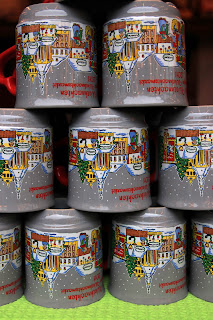


Christmas seems fairly understated here compared to in America -- and I like that. Our family doesn't have TV or radios here, and we don't get a newspaper or even go shopping very much. So commercials and advertising aren't crammed down our throats throughout the holidays in Europe, which is a very nice change of pace.
I suppose the Christmas markets that take place in almost every village, town and city in Germany, Switzerland and Austria would be this culture's version of commercializing the Advent season. It just seems more tasteful here, somehow.
Last year was my first Christmas in Europe, and due to inclement weather, I only got to visit the market in Rothenburg ob der Tauber. This year, I'm hitting four markets. I've been to Heidelberg and Frankfurt so far. Basel is this weekend.
Here are a few photos of the experiences:


These are called "schneeballen," or snow balls. They're pie dough deep fried and covered in all kinds of toppings. Here's how they're made: http://rileyquinnauthor.blogspot.com/2010/10/rothenburg-schneeballen.html.


Wednesday, November 9, 2011
Chickens at midnight
The phone rang, and when I answered it, a voice said, "The Chicken Mother say you come at midnight, and come alone."
It sounds like the opening to a mystery or mob movie, or a weird dream I might have. But it actually happened.
One of the people in the English class I teach each week is named Harald. He patches together a variety of odd jobs. Two weeks ago he was telling me about one of them, in which he spends 1-2 hours in the middle of the night at a nearby farm helping to move sleeping chickens into crates and onto a truck so they can be sent off to slaughter; the meat is then prepared and packaged for a chain of Swiss grocery stores.
He mentioned how the farmer, who was a woman, would serve cake, fruit and drinks to all her workers following each night's work. I thought it was cute that, not knowing an English word for a female farmer, he kept calling her "The Chicken Mother."
"It pay very good," he added. "One hundred Swiss Francs an hour!"
My ears perked up. That's about 90 or 95 USD. We could certainly use 100 bucks every couple of weeks. And then there's the fact that I secretly harbor a romantic fascination with farm and ranch work, and always wished I could quit my career just for a summer to work on a ranch or farm to see what it would be like
"Do they need any extra hands?" I asked Harald.
I remembered one of my coworkers has also been looking for ways to earn a few extra bucks, so I added that I had a friend who might be interested in this job, too. He said he would find out.
A week later he called our flat and, in his limited English, said, "The Chicken Mother say you come at midnight, and come alone." The "come alone" part indicated that they only needed one additional person, so I would have to leave my friend behind. Still, I had to laugh at the mafia-like way he had used to tell me this.
At 11:30 p.m. the next day, I met Harald in front of an enormous, long building, about a football field (American football) in width and length. Two university-aged girls and three Swiss men in their 20s or 30s waited there, as well. They showed me where to get gloves and a mask to cover my nose and mouth.
After everyone was suited up, we were led into a small room where we had to step in a pan of something soapy they said was disinfectant. Then we went through a door into the massive building.
There were no lights on, but the full moonlight filtered inside. My jaw hung open as I surveyed the gently undulating carpet of white chickens covering every square inch of the vast floor. I have never seen so many animals in one place in my entire life. Harald said there were 10,000 chickens in this room.
"We have to move 5,092 chickens tonight," he said. I counted how many of us there were: seven. Seven of us were going to crate up more than 5,000 chickens in one night?
We carefully stepped between the drowsy chickens that were settled quietly on the floor. In the dark, the guys began hauling in large, rectangular, plastic crates, each with a sliding opening on the top. Harald explained that we had to get 15 chickens in each crate. I watched as the girls laid the crates flat, sat on one end and just started grabbing the chickens nearest to them, stuffing them in the holes in the crates.
I followed suit, counting out loud as I grabbed the warm, soft chickens around their wings to prevent them from flapping. I laid them in the crate, shoving them to either edge to make room for more chickens through the opening.
The chickens must have been pretty groggy because they only protested a little bit, and most didn't even bother to move as we worked our way deeper into the building, shuffling through the soft, mulchy floor.
It was only about 10 minutes before my back became so sore that I was afraid it would go into spasms. Even though I exercise four to five times a week, my legs began trembling from the intensity of this work, and the rapid movements of dipping down to grab a chicken and swinging it around to the crate beside me was making me dizzy. As I got shakier, I worried that I couldn't do this after all. But 10 minutes later, I stopped feeling the pain in my back and learned to sit on the crate instead of trying to squat and bend over.
 We worked as fast as we could in the dark. As the crates were filled and closed, the guys would stack them onto a forklift, which carried them out of the chicken house and to a tractor trailer parked outside. Then the forklift would come back with more empty crates, and the guys would drag them toward us as we went further and further into the building.
Sweat was running down my face and in my eyes; I tasted salt on my lip. I ignored it and kept going.
I rather enjoyed the work -- it was like getting paid to do aerobic exercise for an hour, and also to get to handle animals, which I always like (even though we were sending them to their deaths).
During the entire hour, story plotlines about the chickens ran around in my head.
I imagined the chickens' fears as they were packed into crates; I wondered whether we were separating family members, and what the chickens who were in the far end of the warehouse thought about all the noise and commotion on our end. I also thought to myself that if the chickens weren't so docile -- if they decided to revolt en masse -- there would be no way we could finish crating them up. But they didn't. They just calmly squatted in the mulch until we grabbed them.
Before I knew it, we were done. I looked around and couldn't believe that we were halfway down the huge room, and that behind us the entire floor was empty.
Out in the air, away from the stench of chicken and chicken poop, I noticed a few chickens had had accidents on my sweatshirt and torn, old jeans. Yuck. We washed up at a big sink and then were led into a makeshift kitchen area where a table had been set up with drinks, a bowl of muesli and yogurt, a home-made chocolate quick bread, a bowl of clementines, cookies and rolls and butter. I had eaten a pretty big dinner in anticipation of the work so I just peeled a clementine and listened to everyone talking in Swiss German.
The "Chicken Mother" -- a rather young woman -- invited me to come again to crate up the remaining 5,000 chickens, and to bring my friend if she still wanted to come with me. Then the lady had us each sign a piece of paper and handed us a 100-Franc bill. It was about 1:15 a.m. when I drove home.
Boxing up 5,000 chickens had only taken 60 minutes.
That was my first-ever farm work experience, and I have to say it was pretty interesting and fun. It's a great workout; it only takes an hour and, fortunately, I am a night owl, so doing it at midnight is not a problem for me.
And, I will never look at that package of chicken breasts in the store the same way again.
It sounds like the opening to a mystery or mob movie, or a weird dream I might have. But it actually happened.
One of the people in the English class I teach each week is named Harald. He patches together a variety of odd jobs. Two weeks ago he was telling me about one of them, in which he spends 1-2 hours in the middle of the night at a nearby farm helping to move sleeping chickens into crates and onto a truck so they can be sent off to slaughter; the meat is then prepared and packaged for a chain of Swiss grocery stores.
He mentioned how the farmer, who was a woman, would serve cake, fruit and drinks to all her workers following each night's work. I thought it was cute that, not knowing an English word for a female farmer, he kept calling her "The Chicken Mother."
"It pay very good," he added. "One hundred Swiss Francs an hour!"
My ears perked up. That's about 90 or 95 USD. We could certainly use 100 bucks every couple of weeks. And then there's the fact that I secretly harbor a romantic fascination with farm and ranch work, and always wished I could quit my career just for a summer to work on a ranch or farm to see what it would be like
"Do they need any extra hands?" I asked Harald.
I remembered one of my coworkers has also been looking for ways to earn a few extra bucks, so I added that I had a friend who might be interested in this job, too. He said he would find out.
A week later he called our flat and, in his limited English, said, "The Chicken Mother say you come at midnight, and come alone." The "come alone" part indicated that they only needed one additional person, so I would have to leave my friend behind. Still, I had to laugh at the mafia-like way he had used to tell me this.
At 11:30 p.m. the next day, I met Harald in front of an enormous, long building, about a football field (American football) in width and length. Two university-aged girls and three Swiss men in their 20s or 30s waited there, as well. They showed me where to get gloves and a mask to cover my nose and mouth.
After everyone was suited up, we were led into a small room where we had to step in a pan of something soapy they said was disinfectant. Then we went through a door into the massive building.
There were no lights on, but the full moonlight filtered inside. My jaw hung open as I surveyed the gently undulating carpet of white chickens covering every square inch of the vast floor. I have never seen so many animals in one place in my entire life. Harald said there were 10,000 chickens in this room.
"We have to move 5,092 chickens tonight," he said. I counted how many of us there were: seven. Seven of us were going to crate up more than 5,000 chickens in one night?
We carefully stepped between the drowsy chickens that were settled quietly on the floor. In the dark, the guys began hauling in large, rectangular, plastic crates, each with a sliding opening on the top. Harald explained that we had to get 15 chickens in each crate. I watched as the girls laid the crates flat, sat on one end and just started grabbing the chickens nearest to them, stuffing them in the holes in the crates.
I followed suit, counting out loud as I grabbed the warm, soft chickens around their wings to prevent them from flapping. I laid them in the crate, shoving them to either edge to make room for more chickens through the opening.
The chickens must have been pretty groggy because they only protested a little bit, and most didn't even bother to move as we worked our way deeper into the building, shuffling through the soft, mulchy floor.
It was only about 10 minutes before my back became so sore that I was afraid it would go into spasms. Even though I exercise four to five times a week, my legs began trembling from the intensity of this work, and the rapid movements of dipping down to grab a chicken and swinging it around to the crate beside me was making me dizzy. As I got shakier, I worried that I couldn't do this after all. But 10 minutes later, I stopped feeling the pain in my back and learned to sit on the crate instead of trying to squat and bend over.
We worked as fast as we could in the dark. As the crates were filled and closed, the guys would stack them onto a forklift, which carried them out of the chicken house and to a tractor trailer parked outside. Then the forklift would come back with more empty crates, and the guys would drag them toward us as we went further and further into the building.Sweat was running down my face and in my eyes; I tasted salt on my lip. I ignored it and kept going.
I rather enjoyed the work -- it was like getting paid to do aerobic exercise for an hour, and also to get to handle animals, which I always like (even though we were sending them to their deaths).
During the entire hour, story plotlines about the chickens ran around in my head.
I imagined the chickens' fears as they were packed into crates; I wondered whether we were separating family members, and what the chickens who were in the far end of the warehouse thought about all the noise and commotion on our end. I also thought to myself that if the chickens weren't so docile -- if they decided to revolt en masse -- there would be no way we could finish crating them up. But they didn't. They just calmly squatted in the mulch until we grabbed them.
Before I knew it, we were done. I looked around and couldn't believe that we were halfway down the huge room, and that behind us the entire floor was empty.
Out in the air, away from the stench of chicken and chicken poop, I noticed a few chickens had had accidents on my sweatshirt and torn, old jeans. Yuck. We washed up at a big sink and then were led into a makeshift kitchen area where a table had been set up with drinks, a bowl of muesli and yogurt, a home-made chocolate quick bread, a bowl of clementines, cookies and rolls and butter. I had eaten a pretty big dinner in anticipation of the work so I just peeled a clementine and listened to everyone talking in Swiss German.
The "Chicken Mother" -- a rather young woman -- invited me to come again to crate up the remaining 5,000 chickens, and to bring my friend if she still wanted to come with me. Then the lady had us each sign a piece of paper and handed us a 100-Franc bill. It was about 1:15 a.m. when I drove home.
Boxing up 5,000 chickens had only taken 60 minutes.
That was my first-ever farm work experience, and I have to say it was pretty interesting and fun. It's a great workout; it only takes an hour and, fortunately, I am a night owl, so doing it at midnight is not a problem for me.
And, I will never look at that package of chicken breasts in the store the same way again.
Tuesday, September 27, 2011
Daytrip heaven
One of the best things about living in Switzerland is its central location in Europe (8 hours in any direction to any major European city) as well as its small size. On a $50 tank of gas, we can drive almost from one end of the country to the other and back in a day (we're Americans, we don't mind the driving).
That allows you to take a leisurely Saturday to see things like this:

And this:

And this:

And this:

Yep, being landlocked in the center of Western Europe is not so bad at all.
That allows you to take a leisurely Saturday to see things like this:

And this:

And this:

And this:

Yep, being landlocked in the center of Western Europe is not so bad at all.
Thursday, September 15, 2011
Let them eat cake!
Before we moved to Switzerland, I was obsessed with making Amish Friendship Bread. I love sweet, quick breads -- banana chocolate chip bread, pumpkin bread, zucchini bread, pineapple coconut bread, chocolate cherry bread and my new obsession, banana coconut bread.
I whipped up a yeast starter for the Amish Friendship Bread a few weeks ago and baked a couple loaves of pineapple coconut bread for new friends we've made here. I thought it would be fun to share a little American dessert tradition.
When I presented them the foil-wrapped loaf with the Sharpie label reading, "Ananas-Cocos," I said proudly, "This is pineapple coconut Amish Friendship Bread."
Smiling happily, they paused over the label, then asked, "It's pineapple BREAD?"
"Yeah, it's a popular kind of bread that people make in the States and give to friends."
"So, it's sweet or ...?" they continued, in growing confusion. "Do you make sandwiches from it?"
"No, no," I quickly corrected, surprised. "You eat it with coffee or for a snack."
"OH, so it's cake!" they replied.
"It's actually bre--, uh, yeah, it's cake."
This is how I stopped to reflect that in America, we call a dessert "bread" if it's shaped in a loaf (unless it's "pound cake"); if it's a rectangle in a pan, it's "cake" and if it's in a round dish, cut into triangles, it's "pie."
Over here, it is much simpler. Everything is just cake.
I whipped up a yeast starter for the Amish Friendship Bread a few weeks ago and baked a couple loaves of pineapple coconut bread for new friends we've made here. I thought it would be fun to share a little American dessert tradition.
When I presented them the foil-wrapped loaf with the Sharpie label reading, "Ananas-Cocos," I said proudly, "This is pineapple coconut Amish Friendship Bread."
Smiling happily, they paused over the label, then asked, "It's pineapple BREAD?"
"Yeah, it's a popular kind of bread that people make in the States and give to friends."
"So, it's sweet or ...?" they continued, in growing confusion. "Do you make sandwiches from it?"
"No, no," I quickly corrected, surprised. "You eat it with coffee or for a snack."
"OH, so it's cake!" they replied.
"It's actually bre--, uh, yeah, it's cake."
This is how I stopped to reflect that in America, we call a dessert "bread" if it's shaped in a loaf (unless it's "pound cake"); if it's a rectangle in a pan, it's "cake" and if it's in a round dish, cut into triangles, it's "pie."
Over here, it is much simpler. Everything is just cake.
Thursday, September 8, 2011
Why Americans and Europeans vacation differently
Now that we've been here for a while, I've been studying the differences between how Americans and Europeans vacation. I am not sure I fully understand all the factors, but from what Swiss and German people have explained to me, this is what I have seen and heard so far:
1. First off, the minimum amount of vacation time that Europeans are given is usually 3 weeks. Even if you just started a new job, you can expect to begin at the company with 3 weeks of vacation. The longer you work there, the more you earn. It's very common to have 5 weeks of vacation that you are allowed to take.
2. Unlike Americans, they will take it all at once. During the summer, usually in August, they'll just leave for an entire three weeks. Sometimes in August it actually feels like the apocalypse has occurred, or that you're in the beginning of the movie 28 Days Later. Post offices, restaurants and businesses will be shuttered up and locked. On July 31, it's a good idea to have lots of toilet paper stored, a vegetable garden you can eat out of, and probably a cow or a goat for milk, or you might run out of household necessities, as well as starve, before they all come back.
3. The other thing is that they will go just one place and spend the entire three weeks there, or divide up their time between maybe two locations. So, they'll rent a cabin on a lake or in the mountains or something and just stay put. They might go out during the days and hike or mountain climb or fish or whatever, but they're going back to the same hotel or cabin or RV or their relative's house every night. The idea of moving from hotel to hotel and from city to city every few days, like Americans do when we're in Europe, seems to exhaust them. It is not their idea of a holiday. It's like they think a vacation is for rest or something. Whatever.
4. Now, obviously, taking more days in a row of your vacation makes for a more expensive vacation. That is why Americans will take just two or three days at a time, or if we're really lucky, a whole week -- we blow our limited travel budget on that long weekend and have to scrimp and save up for two or three months (or a year) before we can afford another three-day weekend trip. Europeans are committed to their three weeks, and seem to find ways to offset the cost.
5. The other thing is that since Europeans LIVE in Europe, it's not like they have this pressure to see as much as they can over a limited period of time. Therefore, they might go back to the same vacation place year after year after year. They know they can always go to Berlin or London or Rome next year.
OK, so with all that as context, Europeans, and especially the Swiss, think American tourists are insane. They don't understand some basic differences:
1. We don't get 3 weeks of vacation. Heck, we're lucky if we get a whole week. Even if we have 3 weeks, we usually aren't allowed by our jobs to take that much time off in a row or else our company will collapse without us. Our bosses make us talk to all our other fellow employees to coordinate our vacations so that somebody is there every day of the year, so that the lights are on and the doors are open 24 hours a day, 7 days a week, especially Christmas and Thanksgiving. In Europe, the entire restaurant or grocery store is closed for 3 weeks and everyone is gone. For whatever reason, there is no looting.
2. The price of the airline ticket just to get to Europe is equal to the cost of a human kidney. Europeans don't have that expense.
3. If we are going to sell our kidney to afford a freaking plane ticket, we better make the trip worth it. Therefore, we are going to see a different country every day; maybe two countries in one day.
4. America is big. It is nothing to drive 16 hours in a day to go skiing and then drive 16 hours back two days later. So we think it's a fantastic idea to ride a train 4 hours from Paris to Zurich and then, the evening after seeing Zurich, to catch the 8-hour train ride for Rome, continuing like this for one or two weeks.
Europeans think that is insane. You can cross the entire country of Switzerland in three hours. So, for a Swiss person, the idea of driving even 30 minutes somewhere on a Saturday is exhausting, let alone driving the 6 hours from Zurich to Paris for a two-week vacation. If you are a Swiss person going a distance of six hours, you are going to stop and spend the night three times on the way to break it up into manageable two-hour chunks of driving.
And that's why Americans and Europeans vacation differently.
1. First off, the minimum amount of vacation time that Europeans are given is usually 3 weeks. Even if you just started a new job, you can expect to begin at the company with 3 weeks of vacation. The longer you work there, the more you earn. It's very common to have 5 weeks of vacation that you are allowed to take.
2. Unlike Americans, they will take it all at once. During the summer, usually in August, they'll just leave for an entire three weeks. Sometimes in August it actually feels like the apocalypse has occurred, or that you're in the beginning of the movie 28 Days Later. Post offices, restaurants and businesses will be shuttered up and locked. On July 31, it's a good idea to have lots of toilet paper stored, a vegetable garden you can eat out of, and probably a cow or a goat for milk, or you might run out of household necessities, as well as starve, before they all come back.
3. The other thing is that they will go just one place and spend the entire three weeks there, or divide up their time between maybe two locations. So, they'll rent a cabin on a lake or in the mountains or something and just stay put. They might go out during the days and hike or mountain climb or fish or whatever, but they're going back to the same hotel or cabin or RV or their relative's house every night. The idea of moving from hotel to hotel and from city to city every few days, like Americans do when we're in Europe, seems to exhaust them. It is not their idea of a holiday. It's like they think a vacation is for rest or something. Whatever.
4. Now, obviously, taking more days in a row of your vacation makes for a more expensive vacation. That is why Americans will take just two or three days at a time, or if we're really lucky, a whole week -- we blow our limited travel budget on that long weekend and have to scrimp and save up for two or three months (or a year) before we can afford another three-day weekend trip. Europeans are committed to their three weeks, and seem to find ways to offset the cost.
5. The other thing is that since Europeans LIVE in Europe, it's not like they have this pressure to see as much as they can over a limited period of time. Therefore, they might go back to the same vacation place year after year after year. They know they can always go to Berlin or London or Rome next year.
OK, so with all that as context, Europeans, and especially the Swiss, think American tourists are insane. They don't understand some basic differences:
1. We don't get 3 weeks of vacation. Heck, we're lucky if we get a whole week. Even if we have 3 weeks, we usually aren't allowed by our jobs to take that much time off in a row or else our company will collapse without us. Our bosses make us talk to all our other fellow employees to coordinate our vacations so that somebody is there every day of the year, so that the lights are on and the doors are open 24 hours a day, 7 days a week, especially Christmas and Thanksgiving. In Europe, the entire restaurant or grocery store is closed for 3 weeks and everyone is gone. For whatever reason, there is no looting.
2. The price of the airline ticket just to get to Europe is equal to the cost of a human kidney. Europeans don't have that expense.
3. If we are going to sell our kidney to afford a freaking plane ticket, we better make the trip worth it. Therefore, we are going to see a different country every day; maybe two countries in one day.
4. America is big. It is nothing to drive 16 hours in a day to go skiing and then drive 16 hours back two days later. So we think it's a fantastic idea to ride a train 4 hours from Paris to Zurich and then, the evening after seeing Zurich, to catch the 8-hour train ride for Rome, continuing like this for one or two weeks.
Europeans think that is insane. You can cross the entire country of Switzerland in three hours. So, for a Swiss person, the idea of driving even 30 minutes somewhere on a Saturday is exhausting, let alone driving the 6 hours from Zurich to Paris for a two-week vacation. If you are a Swiss person going a distance of six hours, you are going to stop and spend the night three times on the way to break it up into manageable two-hour chunks of driving.
And that's why Americans and Europeans vacation differently.
Monday, September 5, 2011
The Stages of Culture Shock
Having been here about 18 months, I would like to give a concrete example of the Stages of Culture Shock.
Directly across the street from my office window is the village church. Every village church has a steeple and bells that mark every quarter hour, every half hour and every hour. Twice a day, these bells (plural) clang continuously at 11 a.m. and 6 p.m., for at least one minute.
It feels like an hour. It's so loud that all phone calls or Skype meetings (or YouTube videos) must come to a screeching halt until said bells are done.
When I first arrived in this quaint little rural village, I was enchanted by this church and its lovely European bells.
Now, not so much.
Culture Shock Stage 1: The Honeymoon.
Everything in the Honeymoon Stage is new, fresh and exciting. Every experience is rich and euphoric. You feel that you could enjoy these things forever.
In my first week at my new office in Switzerland, at precisely 11 a.m., the bells begin their sweet music. I stop work on my computer and rush to the window, throwing it open to get the full effect of the pure, pealing sounds. I lean out with my Canon Digital ELPH to record video of this authentic Swiss experience and post it to my blog for all my friends and family at home so they can share in my enthusiasm for its novelty and charm.
Culture Shock Stage 2: Distress
What at first seemed new and exciting becomes increasingly irritating and confusing.
At 6 p.m. during my third month at my office in Switzerland, I am in the middle of a video call with a news source in Russia. It's tough enough to understand through his accent over the bad connection. But now, the bells burst into an explosion of seemingly discordant clanging.
Russian guy: "What is going (unintelligible) there?"
Me: "Uh, sorry, hold on," I say, frantically trying to lower the volume on my microphone and leaning over to close the open window.
Me: "THERE'S A CHURCH ACROSS THE STREET," I shout at the computer.
Russian guy: "WHA --" he yells back, and I can hear the clanging reverberating from his computer speakers and back into my mine.
Me: "IT'S A CHURCH. ACROSS THE STREET," I try to explain. I think the bells might be triggering a migraine.
Russian guy: "THAT'S A (garbled) CHURCH?"
Me: "YES, CHURCH BELLS. IF YOU COULD WAIT JUST A MOMENT..." I beg.
Russian guy: "I (garbled static because of too much noise going into my microphone) HEAR YOU--(static)."
Culture Shock Stage 3: Withdrawal
You refuse to accept what is new and different in the culture. You're frustrated, irritable, and feel hostile to the place and the people.
It's 11 a.m., and I'm working hard on a complicated article, humming to songs on iTunes. When the steeple bells begin their shrill, mocking laughter at me, I slam the window shut and crank up the computer speakers as loud as they will go, singing off-key at the top of my lungs. When that doesn't work, I plug my ears and yell, "I CAN'T HEAR YOU. I CAN'T HEAR YOU."
(OK, I don't actually do that. But I feel like it.) I go downstairs to get a coffee and wait it out.
If there were a hunchback, there is nowhere he could run that I would not find him.
Culture Shock Stage 4: Adjustment
You learn to accept the culture, and your negative feelings toward the differences become more positive.
A friend is visiting Switzerland and stops by my office to see where I work. We're sharing coffee at my desk when the steeple clock strikes 11 a.m., and the daily musical announcement of the time begins.
Friend: "THAT IS SOOOO COOL," she enthuses in a loud voice to get above the resonating metal striking metal. "DO YOU GET TO HEAR THAT EVERY DAY?"
Me: "YEAH," I affirm, hesitant. "DON'T YOU THINK IT'S LOUD?"
Friend: "I GUESS SO. BUT IT'S SOOOO EUROPEAN!"
Me: "IT'S KIND OF A NUISANCE WHEN I'M ON THE PHONE, THOUGH," I feel it necessary to point out.
Friend: "SURE. BUT, IT'S EUROPE, YOU KNOW?"
Me: "AND I DON'T NEED TO WEAR A WATCH ANYMORE."
Culture Shock Stage 5: Acceptance
You feel at home and may even adopt some of the country's customs.
During a video call at 6 p.m. with U.S. based office team back home, they suddenly stop.
Coworker: "Are those church bells going off?"
Me: "What?" I ask, confused. Then I realize I hadn't noticed the steeple bells across the street this time. "Oh, sorry about that. They do that every day at 11 in the morning and 6 in the evening. Let me turn the volume down."
Coworker: "That's pretty neat. A Swiss church right across the street!"
Coworker 2: "I'd love to hear that every so often. I sure miss those European churches."
Me: "I will, too," I say, knowing my contract here won't last forever.
Directly across the street from my office window is the village church. Every village church has a steeple and bells that mark every quarter hour, every half hour and every hour. Twice a day, these bells (plural) clang continuously at 11 a.m. and 6 p.m., for at least one minute.
It feels like an hour. It's so loud that all phone calls or Skype meetings (or YouTube videos) must come to a screeching halt until said bells are done.
When I first arrived in this quaint little rural village, I was enchanted by this church and its lovely European bells.
Now, not so much.
Culture Shock Stage 1: The Honeymoon.
Everything in the Honeymoon Stage is new, fresh and exciting. Every experience is rich and euphoric. You feel that you could enjoy these things forever.
In my first week at my new office in Switzerland, at precisely 11 a.m., the bells begin their sweet music. I stop work on my computer and rush to the window, throwing it open to get the full effect of the pure, pealing sounds. I lean out with my Canon Digital ELPH to record video of this authentic Swiss experience and post it to my blog for all my friends and family at home so they can share in my enthusiasm for its novelty and charm.
Culture Shock Stage 2: Distress
What at first seemed new and exciting becomes increasingly irritating and confusing.
At 6 p.m. during my third month at my office in Switzerland, I am in the middle of a video call with a news source in Russia. It's tough enough to understand through his accent over the bad connection. But now, the bells burst into an explosion of seemingly discordant clanging.
Russian guy: "What is going (unintelligible) there?"
Me: "Uh, sorry, hold on," I say, frantically trying to lower the volume on my microphone and leaning over to close the open window.
Me: "THERE'S A CHURCH ACROSS THE STREET," I shout at the computer.
Russian guy: "WHA --" he yells back, and I can hear the clanging reverberating from his computer speakers and back into my mine.
Me: "IT'S A CHURCH. ACROSS THE STREET," I try to explain. I think the bells might be triggering a migraine.
Russian guy: "THAT'S A (garbled) CHURCH?"
Me: "YES, CHURCH BELLS. IF YOU COULD WAIT JUST A MOMENT..." I beg.
Russian guy: "I (garbled static because of too much noise going into my microphone) HEAR YOU--(static)."
Culture Shock Stage 3: Withdrawal
You refuse to accept what is new and different in the culture. You're frustrated, irritable, and feel hostile to the place and the people.
It's 11 a.m., and I'm working hard on a complicated article, humming to songs on iTunes. When the steeple bells begin their shrill, mocking laughter at me, I slam the window shut and crank up the computer speakers as loud as they will go, singing off-key at the top of my lungs. When that doesn't work, I plug my ears and yell, "I CAN'T HEAR YOU. I CAN'T HEAR YOU."
(OK, I don't actually do that. But I feel like it.) I go downstairs to get a coffee and wait it out.
If there were a hunchback, there is nowhere he could run that I would not find him.
Culture Shock Stage 4: Adjustment
You learn to accept the culture, and your negative feelings toward the differences become more positive.
A friend is visiting Switzerland and stops by my office to see where I work. We're sharing coffee at my desk when the steeple clock strikes 11 a.m., and the daily musical announcement of the time begins.
Friend: "THAT IS SOOOO COOL," she enthuses in a loud voice to get above the resonating metal striking metal. "DO YOU GET TO HEAR THAT EVERY DAY?"
Me: "YEAH," I affirm, hesitant. "DON'T YOU THINK IT'S LOUD?"
Friend: "I GUESS SO. BUT IT'S SOOOO EUROPEAN!"
Me: "IT'S KIND OF A NUISANCE WHEN I'M ON THE PHONE, THOUGH," I feel it necessary to point out.
Friend: "SURE. BUT, IT'S EUROPE, YOU KNOW?"
Me: "AND I DON'T NEED TO WEAR A WATCH ANYMORE."
Culture Shock Stage 5: Acceptance
You feel at home and may even adopt some of the country's customs.
During a video call at 6 p.m. with U.S. based office team back home, they suddenly stop.
Coworker: "Are those church bells going off?"
Me: "What?" I ask, confused. Then I realize I hadn't noticed the steeple bells across the street this time. "Oh, sorry about that. They do that every day at 11 in the morning and 6 in the evening. Let me turn the volume down."
Coworker: "That's pretty neat. A Swiss church right across the street!"
Coworker 2: "I'd love to hear that every so often. I sure miss those European churches."
Me: "I will, too," I say, knowing my contract here won't last forever.
Friday, August 12, 2011
A walk in the clouds


It was awesome.
Wednesday, August 3, 2011
Dieting in Europe
Nutritional labels are different in Europe than those in the States. Unlike U.S. labels, which break down the calories per tablespoon, ounce or serving of something (although I often take umbrage with what measly amounts are considered a serving), the labels in Europe tell you how many calories you would eat if you ate 100 grams of something.
Well, nobody eats 100 grams of butter or 100 grams of salad dressing (i.e. a tub of butter might be 200 grams). So I've had to learn to do things differently when it comes to counting calories every day.
Here's a lunch-time attempt at calorie counting:
A bottle of salad dressing contains 250 milliliters of dressing, but the label says that there are 302 calories in 100 grams of dressing.
How many milliliters are in a gram?
I learned through a Google search that it is a one-to-one ratio. So I multiplied 302 by 2.5, to come up with 755 = the bottle contains 755 calories total.
I usually measure out dressing in tablespoons, so I needed to figure out how many calories are in one tablespoon.
The tricky thing is that a tablespoon measures volume whereas grams measure weight. A tablespoon of something thick and heavy will be more grams than a tablespoon of something light, like flour or powdered sugar.
Therefore I Internet searched how much a tablespoon of salad dressing would weigh. I couldn't find it, but found the weight of a tablespoon of oil -- 13.65 grams.
Next, I divided 250 by 13.65 grams, which gave me the result of 18.13 -- roughly 18 tablespoons per bottle. Then I divide 755 by 18 = 41 calories per tablespoon.
I wonder how many calories I burned just trying to figure that out.
Well, nobody eats 100 grams of butter or 100 grams of salad dressing (i.e. a tub of butter might be 200 grams). So I've had to learn to do things differently when it comes to counting calories every day.
Here's a lunch-time attempt at calorie counting:
A bottle of salad dressing contains 250 milliliters of dressing, but the label says that there are 302 calories in 100 grams of dressing.
How many milliliters are in a gram?
I learned through a Google search that it is a one-to-one ratio. So I multiplied 302 by 2.5, to come up with 755 = the bottle contains 755 calories total.
I usually measure out dressing in tablespoons, so I needed to figure out how many calories are in one tablespoon.
The tricky thing is that a tablespoon measures volume whereas grams measure weight. A tablespoon of something thick and heavy will be more grams than a tablespoon of something light, like flour or powdered sugar.
Therefore I Internet searched how much a tablespoon of salad dressing would weigh. I couldn't find it, but found the weight of a tablespoon of oil -- 13.65 grams.
Next, I divided 250 by 13.65 grams, which gave me the result of 18.13 -- roughly 18 tablespoons per bottle. Then I divide 755 by 18 = 41 calories per tablespoon.
I wonder how many calories I burned just trying to figure that out.
Monday, August 1, 2011
Happy Anniversary, Switzerland
Today is Switzerland's National Day, an equivalent of my American July 4th -- a day to celebrate the country's "birth" or founding. Most Swiss are off work, many businesses are closed and there will be city celebrations, friends and families gathering for barbecues, and many towns will have fireworks at dusk.
As an American, it's interesting to think about the difference between how our countries got their start. When it comes to our national birthdays, Americans celebrate a "breaking away" while the Swiss celebrate a "coming together."
Nearly 500 years before the British colonists challenged their faraway king's taxation policies, on August 1, 1291, three "cantons," or fully sovereign states, in the Alps swore an "oath of confederation" -- a bond of brotherhood, a promise to work together if they were ever threatened by outside forces.
By the 1500s, there were 13 canton members of this confederation. Switzerland was officially formed as a country in the 19th century, but it wasn't until 1993 that National Day became a federal holiday.
As an American, it's interesting to see how the different foundings of our two countries have shaped our cultures.
Rebellion, freedom and independent-thinking are part of America's national psyche, traceable all the way back to the seeds planted during our revolution. Our cultural personality has only been reinforced over the years by the millions of immigrants who, fleeing hardship or oppression, grafted themselves into our culture. The very act of leaving behind language, tradition and family was, for many, a rebellion against poverty, caste systems or authority in one form or another.
The first seeds that grew into what is now Switzerland were planted in an act of peace, an agreement of interdependence. While the country is also fiercely independent -- not joining the United Nations until 2002 and still not a member of the European Union -- its philosophy of neutrality is quite different from the United States' tendency toward active intervention.
This is all quite oversimplified and generalized. But my main point is that it's interesting to observe Switzerland's unusual history in a world in which nations are more likely to be born of violence and blood and conquest than in an amicable spirit of brotherhood and peace.
Cheers, Switzerland.

As an American, it's interesting to think about the difference between how our countries got their start. When it comes to our national birthdays, Americans celebrate a "breaking away" while the Swiss celebrate a "coming together."
Nearly 500 years before the British colonists challenged their faraway king's taxation policies, on August 1, 1291, three "cantons," or fully sovereign states, in the Alps swore an "oath of confederation" -- a bond of brotherhood, a promise to work together if they were ever threatened by outside forces.
By the 1500s, there were 13 canton members of this confederation. Switzerland was officially formed as a country in the 19th century, but it wasn't until 1993 that National Day became a federal holiday.
As an American, it's interesting to see how the different foundings of our two countries have shaped our cultures.
Rebellion, freedom and independent-thinking are part of America's national psyche, traceable all the way back to the seeds planted during our revolution. Our cultural personality has only been reinforced over the years by the millions of immigrants who, fleeing hardship or oppression, grafted themselves into our culture. The very act of leaving behind language, tradition and family was, for many, a rebellion against poverty, caste systems or authority in one form or another.
The first seeds that grew into what is now Switzerland were planted in an act of peace, an agreement of interdependence. While the country is also fiercely independent -- not joining the United Nations until 2002 and still not a member of the European Union -- its philosophy of neutrality is quite different from the United States' tendency toward active intervention.
This is all quite oversimplified and generalized. But my main point is that it's interesting to observe Switzerland's unusual history in a world in which nations are more likely to be born of violence and blood and conquest than in an amicable spirit of brotherhood and peace.
Cheers, Switzerland.
Friday, July 29, 2011
"Have it our way"
American fast food restaurants compete for business by claiming that they cater to the customer's every craving. Burger King's mantra is "Have it your way." At McDonald's you can order a cheeseburger but ask them to hold the onions, pickles and ketchup.
Granted, it doesn't mean you'll actually get what you ordered. (I always factor in extra time to go back and point out that I got a McChicken instead of a McRib and two orders are fries are missing.) But they quickly agree to whatever customization you might desire.
One of my fellow reporters at our city newspaper once tested this marketing claim by visiting every brand of fast food restaurant in town to order the most bizarre customizations he could think of. He wanted to see if all of them would actually do it "your way." (That's how he learned there's a reason no restaurant has ever tried to sell a burger-fish patty combo.)
The Germans and Swiss approach customization differently: What customization?
Our local McDonald's has a beautifully extensive breakfast menu. They even sell a McGriddle breakfast sandwich. I love the McGriddle's delicate balance of sweet and salty flavors. In the U.S. you can have the McGriddle with sausage or bacon. In Germany, the McGriddle only comes with sausage.
I don't like breakfast sausage.
On my past three visits to our McDonald's, I've tried with my limited German to ask if they could swap out the sausage for bacon. I know they have bacon in stock. It's on most of their other breakfast sandwiches.
"Koennen Sie McGriddle mit bacon machen?" I ask. (Can you McGriddle with bacon make?)
Each time the cashier's face reflects confusion. And it's not because of my German. Then she glances back at the lighted menu board as if to remember what comes on the McGriddle. She explains to me something in German that I usually don't understand, affirmed by a negative shake of the head.
"Nicht bacon?" I repeat, just to be sure.
"Nein," she replies regretfully. And so I order an Egg McMuffin.
If I knew more German, I would be able to distinguish whether the cashier of the day is saying she is sorry they don't have a bacon option on the menu, or if she means that they are absolutely not able to make it differently, even with a slight upcharge.
This morning, as I ate my Egg McMuffin a little sadly, I tried to see the bright side. I said to my husband, "Ok, you can't have it 'your way' in Germany. But, in spite of the fact that here I'm ordering in a different language, at least I always get what I order. They haven't messed it up once."
"In America you have to order in a different language, too," he pointed out.
Granted, it doesn't mean you'll actually get what you ordered. (I always factor in extra time to go back and point out that I got a McChicken instead of a McRib and two orders are fries are missing.) But they quickly agree to whatever customization you might desire.
One of my fellow reporters at our city newspaper once tested this marketing claim by visiting every brand of fast food restaurant in town to order the most bizarre customizations he could think of. He wanted to see if all of them would actually do it "your way." (That's how he learned there's a reason no restaurant has ever tried to sell a burger-fish patty combo.)
The Germans and Swiss approach customization differently: What customization?
Our local McDonald's has a beautifully extensive breakfast menu. They even sell a McGriddle breakfast sandwich. I love the McGriddle's delicate balance of sweet and salty flavors. In the U.S. you can have the McGriddle with sausage or bacon. In Germany, the McGriddle only comes with sausage.
I don't like breakfast sausage.
On my past three visits to our McDonald's, I've tried with my limited German to ask if they could swap out the sausage for bacon. I know they have bacon in stock. It's on most of their other breakfast sandwiches.
"Koennen Sie McGriddle mit bacon machen?" I ask. (Can you McGriddle with bacon make?)
Each time the cashier's face reflects confusion. And it's not because of my German. Then she glances back at the lighted menu board as if to remember what comes on the McGriddle. She explains to me something in German that I usually don't understand, affirmed by a negative shake of the head.
"Nicht bacon?" I repeat, just to be sure.
"Nein," she replies regretfully. And so I order an Egg McMuffin.
If I knew more German, I would be able to distinguish whether the cashier of the day is saying she is sorry they don't have a bacon option on the menu, or if she means that they are absolutely not able to make it differently, even with a slight upcharge.
This morning, as I ate my Egg McMuffin a little sadly, I tried to see the bright side. I said to my husband, "Ok, you can't have it 'your way' in Germany. But, in spite of the fact that here I'm ordering in a different language, at least I always get what I order. They haven't messed it up once."
"In America you have to order in a different language, too," he pointed out.
Wednesday, July 27, 2011
How do you say "layering" in German?
Most women would agree that it's hard enough to get the haircut you want at a salon where the hairdresser speaks your language. Imagine the difficulty in communicating a new hairstyle you want with someone in another language altogether.
My few German classes covered things like greetings (Gruss Gott!), commenting on the weather (Es ist regnet!), how to order in a restaurant (Ich moechte eine pizza mit salami, bitte) and how to talk about your family (Ich habe einen Katze). They didn't teach me how to ask for the bottom to be trimmed, layers throughout and angled bangs. I know Germany has its share of cows, but do they have a word for cowlick?
The danger of trying to prepare your requests through something like Google Translate is that if you put in the phrase "bottom to be trimmed" it might spit out a phrase that has you asking for your butt to be made smaller. I'm terrified of how it might translate "bangs."
Fortunately, I have found a fantastic salon where a picture really is worth a thousand words. The hairdressers speak almost no English, and my German is still embarrassing. So I simply sift through Internet photos of the hairstyle I want, print them out and show them to the stylist. And she gets it exactly right -- usually better -- every time.
I'm certainly not paying Fantastic Sam's prices. But a really good haircut that's going to last me 3-4 months is more than worth 40 euros ($58).
Well, it was more than worth 40 euros a few months ago.
Dang dollar.
My few German classes covered things like greetings (Gruss Gott!), commenting on the weather (Es ist regnet!), how to order in a restaurant (Ich moechte eine pizza mit salami, bitte) and how to talk about your family (Ich habe einen Katze). They didn't teach me how to ask for the bottom to be trimmed, layers throughout and angled bangs. I know Germany has its share of cows, but do they have a word for cowlick?
The danger of trying to prepare your requests through something like Google Translate is that if you put in the phrase "bottom to be trimmed" it might spit out a phrase that has you asking for your butt to be made smaller. I'm terrified of how it might translate "bangs."
Fortunately, I have found a fantastic salon where a picture really is worth a thousand words. The hairdressers speak almost no English, and my German is still embarrassing. So I simply sift through Internet photos of the hairstyle I want, print them out and show them to the stylist. And she gets it exactly right -- usually better -- every time.
I'm certainly not paying Fantastic Sam's prices. But a really good haircut that's going to last me 3-4 months is more than worth 40 euros ($58).
Well, it was more than worth 40 euros a few months ago.
Dang dollar.
Sunday, June 19, 2011
A perfect moment
Saturday was just an all-around perfect weekend day: slept in, enjoyed coffee and news headlines while I gradually woke up; dropped off two cakes to the family of a lady who is in ICU b/c of head trauma from a bad fall; made a home-made pizza for lunch (brie and prosciutto with mushrooms); worked out while watching Lost Season 4, and then housecleaned with A. until everything was spotless; changing out all the linens to fresh, crisp ones.
 But the afternoon reached an absolutely perfect climax when I stepped outside to take out some trash and a cat ran up and rubbed herself against my legs. Then she followed me into the foyer of my building, so I grabbed A. We took turns sitting on the stairs with her rolling around on our laps in an ecstasy of petting.
Later, I sat outside on the front step, and the cat lunged into my lap and settled in for a good long while, resting her chin on my arm. In the shelter of the porch, we stayed dry as it rained and got blustery. It might have been cold, but the chubby cat kept my lap nice and warm. We sat there for a while as I watched the different kinds of trees wave and shiver in the sudden wind. Some lightning streaked across the sky, and the cat only looked up for a second as thunder rolled over us.
 After a few minutes, the sun came out and a complete, perfect rainbow arced across the sky in colorful brilliance.
It was one of those rare, restful and richly sensory moments that I hardly ever have time to experience. I just looked up into the sky and said, "Thanks, God."
But the afternoon reached an absolutely perfect climax when I stepped outside to take out some trash and a cat ran up and rubbed herself against my legs. Then she followed me into the foyer of my building, so I grabbed A. We took turns sitting on the stairs with her rolling around on our laps in an ecstasy of petting. Later, I sat outside on the front step, and the cat lunged into my lap and settled in for a good long while, resting her chin on my arm. In the shelter of the porch, we stayed dry as it rained and got blustery. It might have been cold, but the chubby cat kept my lap nice and warm. We sat there for a while as I watched the different kinds of trees wave and shiver in the sudden wind. Some lightning streaked across the sky, and the cat only looked up for a second as thunder rolled over us.
After a few minutes, the sun came out and a complete, perfect rainbow arced across the sky in colorful brilliance.It was one of those rare, restful and richly sensory moments that I hardly ever have time to experience. I just looked up into the sky and said, "Thanks, God."
Friday, June 17, 2011
Black Forest Ham
So, I learned recently that Black Forest ham, in Germany, (here it is called Schwarzwälder Schinken) is NOT the same thing as Black Forest ham in the United States. Back home, when you get Black Forest ham, it's a cooked and smoked ham, often with a kind of very thin rind on the edges.
Here, it is raw.
 OK, it is smoke cured. But it's transparent and stringy like raw meat. They don't cook it first. It looks a lot like raw bacon.
It's very salty and tasty, but when you first take a bite of your sandwich and are surprised to realize you are eating raw meat, it's a little unsettling.
http://en.wikipedia.org/wiki/Black_Forest_ham
Here, it is raw.

It's very salty and tasty, but when you first take a bite of your sandwich and are surprised to realize you are eating raw meat, it's a little unsettling.
http://en.wikipedia.org/wiki/Black_Forest_ham
Subscribe to:
Posts (Atom)